Prevent shrinkage now with trending computer vision tech

You see that retail shrinkage costs US businesses $132 billion every year. This number keeps going up. With trending computer vision technology, you can prevent shrinkage and make more money. Retailers say they have better security, real-time watching, and smoother store work after using these systems.
Benefit | Description |
|---|---|
AI systems spot loss events right away so you can act fast. | |
Real-time Monitoring | You can notice suspicious actions before they turn into losses. |
Improved Operational Efficiency | AI finds theft patterns and helps your store work better. |
Key Takeaways
Shrinkage makes US businesses lose $132 billion every year. Stopping shrinkage can help you make more money.
Computer vision technology helps security by watching things in real time. It also gives alerts if something looks wrong.
Teaching workers about loss prevention and using new tech can cut shrinkage by as much as 70%.
Adding computer vision to your security systems is easy. You can set it up fast and see results right away.
Check your shrinkage prevention plans often and make them better. This helps you handle new problems and work smarter.
What is shrinkage and why it matters
Shrinkage defined
Sometimes, your store’s inventory numbers do not match what is on the shelves. Shrinkage is the difference between what you record and what you really have. This happens when things go missing from theft, counting mistakes, or bad stock management. Shrinkage is not just about stolen items. It is any loss that keeps you from making full sales from your inventory.
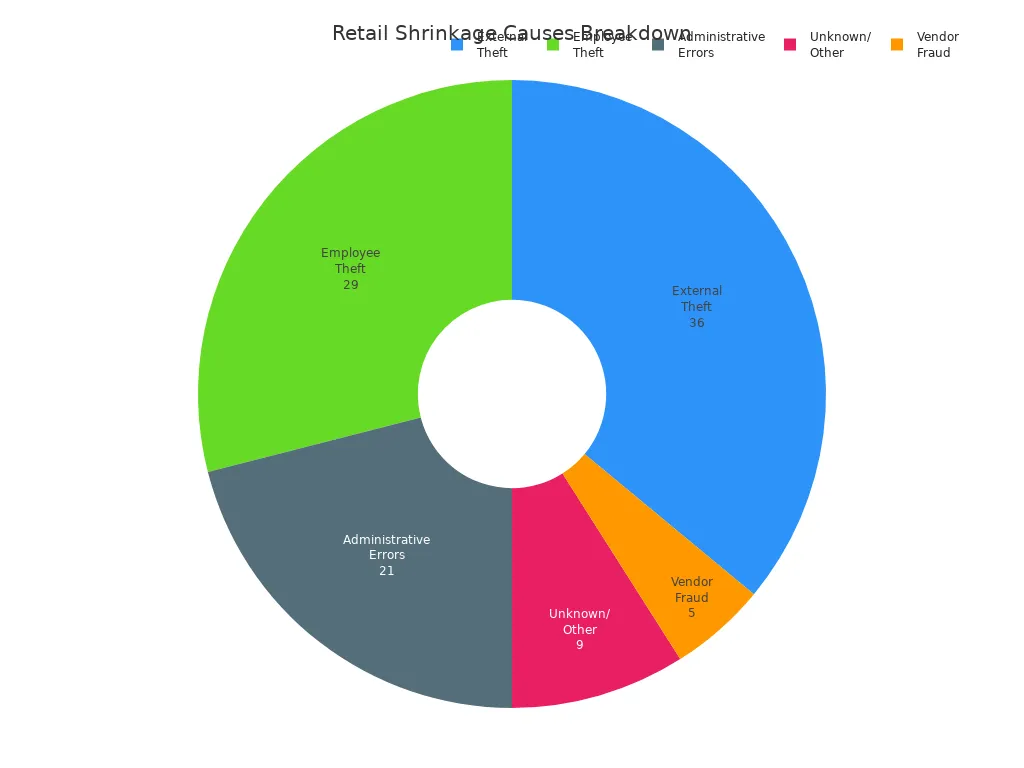
Cause of Shrinkage | Percentage Contribution |
|---|---|
External Theft (Shoplifting & ORC) | ~36% |
Employee Theft (Internal Fraud) | ~29% |
Administrative Errors | ~21% |
Vendor Fraud | ~5% |
Unknown/Other (Damage, Spoilage) | ~9% |
Impact on business and profits
Shrinkage hurts your profits in many ways. You lose money when you have to buy new items to replace what is gone. Sometimes, you must raise prices to make up for these losses. This can make customers shop somewhere else. Your costs go up, and your profit gets smaller. You also spend more on security and keeping track of inventory. Shrinkage is about 1.6% of sales all over the world. These losses add up fast and can hurt your business’s money health.
Shrinkage makes profits go down and prices go up.
It makes costs higher and profits lower.
You spend more on security and replacing lost items.
Why prevention is essential
Stopping shrinkage helps your business stay safe and grow. Teaching your workers helps them notice and act on suspicious things. Using new security tools, like computer vision, keeps your store safer. Good inventory tracking helps you find losses early. Making everyone responsible lets you focus on growing, not losing. Preventing shrinkage means you get the most from your stock and help your business last.
Tip: Train your team often and use new tech to stop theft and mistakes.
Strategy | Description |
|---|---|
Improve Employee Training and Loss Prevention Awareness | Teach staff to spot suspicious actions and handle risky sales. |
Strengthen Inventory Management and Auditing Processes | Use software to track inventory and check it often. |
Enhance Security with Technology-driven Solutions | Put in AI-powered cameras and license plate readers. |
Secure High-risk Areas and Limit Unauthorized Access | Control who can enter and make sure areas are well lit. |
Leverage Data Insights to Prevent Future Shrinkage | Study past problems to make better plans. |
How computer vision prevents shrinkage
Real-time monitoring
Computer vision makes your store cameras smarter. They do more than just record. These systems watch for bad actions as they happen. If someone tries to steal or makes a mistake at checkout, the system sees it right away. You get alerts before you lose anything, so you can act fast and stop shrinkage.
Computer vision turns cameras into tools that help stop loss.
AI checks video right away and finds theft or mistakes.
Real-time alerts let you fix problems before they get worse.
You can see how real-time monitoring helps by looking at the numbers:
Metric | Value |
|---|---|
Shrinkage Reduction | |
Fewer False Alarms | 80% |
LP Team Efficiency | 3x |
Typical Payback Period | 90 Days |
With these results, you can stop shrinkage and make your store safer.
Automated detection and alerts
Computer vision uses AI to watch for risky actions in your store. For example, the system can check self-checkout areas. If someone skips scanning an item, the system notices and tells your staff. You do not have to watch every camera yourself.
The technology learns what normal looks like in your store. When someone acts strange, like hanging around or moving oddly, the system flags it. This helps you catch theft and mistakes early. Automated alerts mean you can act fast and stop shrinkage before you lose money.
Retailer | Technology Used | Impact on Loss Prevention |
|---|---|---|
Walmart | AI-powered cameras for missed scans | Big drop in theft and cashier mistakes, saving millions. |
Amazon Go | Just Walk Out technology | Stops shoplifting with automatic watching. |
Home Depot | Facial recognition for repeat offenders | Cuts theft by finding known shoplifters right away. |
These examples show how automated alerts help you stop shrinkage and protect your business.
Integration with security systems
You can connect computer vision to your security setup. The system makes your cameras better at spotting trouble right away. Video analytics work with your point-of-sale data. This helps you find problems like missed items or wrong discounts.
When the AI finds something wrong, it sends alerts to your video system. Your loss prevention team can see and handle problems without switching apps. You can also get alerts on your phone, so staff can help customers and stop theft fast.
Computer vision works with your CCTV, so you do not need new cameras.
You just connect the system to your network video recorder and point-of-sale system.
This setup lets you start fast and see results quickly, making it easier to stop shrinkage.
Note: Connecting computer vision to your security gives you a stronger, smarter way to stop shrinkage and keep your store safe.
Trending tech to prevent shrinkage

AI video analytics
AI video analytics help you watch your store live. These systems do more than just record. They use smart software to find theft, mistakes, and strange actions right away. For example, Sainsbury’s uses this tech in over 200 stores. The system checks self-checkout spots and finds problems fast. This lets you act quickly and keep your store safe.
Advancement Type | Description |
|---|---|
AI-Powered Video Analytics | Lets you stop losses before they happen. |
Improved Camera Performance | Gives you clear images for better security. |
Integration with POS Systems | Makes it easy to connect video with sales data for quick action. |
Tip: AI video analytics send you alerts right away. This helps you stop shrinkage before it hurts your profits.
You can see how AI video analytics are better than old cameras:
Feature | AI Video Analytics | Traditional Surveillance |
|---|---|---|
Real-time Alerts | Yes | No |
Human Error Reduction | High | Low |
Theft Prevention | Proactive | Reactive |
Monitoring Capability | Many cameras | Few cameras |
Response Time | Instant | Delayed |
Smart cameras and sensors
Smart cameras and sensors help you watch every part of your store. They use computer vision and machine learning to spot trouble fast. You get alerts if someone tampers with products or acts suspiciously. Some systems, like Dibal’s PC scales, even reduce shrinkage in self-service sections by checking every transaction.
Feature | Description |
|---|---|
Spots theft and strange actions right away. | |
Real-time alerts | Sends messages to staff when something is wrong. |
Integration with inventory | Tracks products and cuts down on mistakes. |
AI-driven analytics find theft and odd patterns instantly.
Smart shelf sensors alert you if someone tampers with products.
360° cameras cover every angle, so you do not miss anything.
Stores use these tools to see more and manage stock better. You can stop theft and fix problems before they get bigger.
Cloud-based platforms
Cloud-based platforms make it easy to use advanced security. You do not need to spend a lot of money. You can set up these systems fast and add more as your business grows. Cloud platforms let you watch your stores from anywhere. You can also manage many stores at the same time.
Cloud systems help small and medium stores use smart analytics and real-time monitoring.
You can automate tasks, make inventory more accurate, and save money.
Cloud platforms cut security problems by 43% compared to old systems.
Big cloud companies keep your data safe with strong teams and fast updates.
Note: Cloud-based solutions let you change what you use when you need to. You only pay for what you use, so you save money and keep your store running well.
With these new technologies, you can stop shrinkage, protect your profits, and make your store safer and smarter.
Steps to implement computer vision
Assess shrinkage risks
First, you need to know where shrinkage happens. Check your sales data and loss reports. Use tools like RFID tagging systems and AI-based video analytics. Electronic article surveillance can also help you find problem spots. Put cameras and sensors in places where you lost items before. Look at how you count inventory and teach your staff to spot risks. One mid-sized retail chain dropped shrinkage from 3.2% to 1.1% in a year. They did this by training workers and using digital inventory tools. Loss prevention means you stop theft, mistakes, and process problems. Keep checking your results to find new risks.
Steps to assess shrinkage risks:
Find the main reasons for shrinkage detection.
Pick the right camera for each area.
Get your loss-prevention team to act fast.
Choose the right solution
Pick a computer vision system that matches your store’s needs. Look for real-time monitoring and systems that connect with sales and inventory data. Make sure it watches high-risk items closely. Some systems use predictive analytics to warn you about theft. Use the table below to compare what matters most:
Criteria | Description |
|---|---|
Real-Time Monitoring | Lets you see what happens in your store now. |
Data Integration | Combines camera, POS, and inventory data for better checks. |
Focus on High-Risk SKUs | Watches items that get stolen the most. |
Proactive Loss Prevention | Sends smart alerts to stop theft before it starts. |
When you look at vendors, check if they really lower shrinkage. Use a checklist to see if cameras are in the right spots and follow the law. Figure out your return on investment by looking at shrinkage numbers and costs.
Integration process
You must connect your new system to your store’s setup. Start by finding which jobs computer vision can help with. Review how you track inventory and handle alerts now. Make sure your new system works with your POS and inventory tools. Use APIs so systems can share information. Plan for updates and keep track of changes. Watch how the system works to catch problems early.
Key Step | Description |
|---|---|
Distributed Deployment | Put the system in all your stores. |
Version Control | Track updates to keep things working well. |
Performance Monitoring | Check the system often to make sure it works right. |
System Compatibility | Make sure it works with your tools. |
Data Interoperability |
You might have problems like high costs or bad data quality. The system may not work well in every situation. Test your setup and train your team to handle alerts.
System optimization
After you set up your system, keep making it better. Watch how well it stops shrinkage. Change camera angles and alert settings if you need to. Update your software to fix bugs and add new features. Train your staff often so they know what to do. Keep checking your results and look for new risks. Watching and updating your system helps you stop shrinkage and protect profits.
Tip: Check your system’s performance every month. Small changes can help you stop losses.
Success stories and challenges
Real-world results
When stores use computer vision, they see big changes. Theft goes down and workers do their jobs faster. Self-checkout areas can cut shrinkage by up to 70%. Store teams help more people and work better. Shopping is easier and there are fewer mistakes.
Result Description | Measurable Outcome |
|---|---|
Shrinkage reduction at self-checkouts | |
Improvement in store colleagues’ efficiency | 15% improvement |
Increased throughput | Faster processing due to accuracy |
Overall customer experience | Frictionless and improved experience |
AI-powered loss prevention tools can handle new problems. Using a platform with object detection and custom settings keeps things working well.
Common obstacles
There are some problems when you add computer vision. Stores need good cameras and strong internet to use it. Watching customers can cause privacy worries. Bad lighting or blocked cameras can make it hard to see. You need to test your system often to keep it working. People still need to check important things.
Obstacle | Challenge Description |
|---|---|
Infrastructure | Need for HD cameras and robust network |
Privacy | Balancing insights with customer privacy |
Real-world conditions | Lighting and occlusion affect performance |
Maintenance | Ongoing testing and human oversight required |
Solutions and best practices
You can fix these problems with smart ideas. AI-powered self-checkout alerts staff if someone tries to cheat. Assisted checkout systems find theft and make sales faster. AI-enhanced CCTV watches expensive items and warns about trouble. Changing store layouts helps you see every area. Teaching workers about loss prevention stops some theft.
AI-powered self-checkout solutions catch fraud fast.
Assisted checkout systems spot theft.
AI-enhanced CCTV watches valuable items.
Better store layouts help you see more.
Training workers helps stop inside theft.
These tips help you stop shrinkage and keep your profits safe.
You can stop shrinkage and keep your money safe with computer vision technology. This new tech is better than old ways because it gives you alerts right away. It also watches every part of your store. In the last few years, shoplifting and theft have gone up by more than 90%. Computer vision systems help you find problems quickly and keep your store safe. You get easy steps to follow and see good results. Start now to make your business stronger.
Computer vision finds theft while it happens.
Old loss prevention methods do not work as well with new problems.
FAQ
How does computer vision help you prevent shrinkage?
Computer vision watches your store in real time. It spots theft, errors, and risky actions. You get alerts quickly, so you can act before losses happen.
Is computer vision hard to set up in your store?
You can set up computer vision with your current cameras and systems. Most solutions work with your POS and inventory tools. Training your staff helps you use it well.
Will computer vision protect customer privacy?
Most computer vision systems follow privacy rules. They focus on spotting theft and mistakes, not tracking personal details. You can set privacy settings to keep data safe.
What results can you expect after using computer vision?
You can see shrinkage drop by up to 70%. Your team works faster, and customers have a better experience. Stores report fewer mistakes and higher profits.
See Also
Boosting Efficiency And Customer Satisfaction With Cloudpick Checkout
The Role Of Cloudpick Vending Machines In Promoting Healthy Snacks
Transforming Retail: The Smart Technology Behind Electronics Vending Machines
Automating Fast Food: The Next Generation Of Vending Machines
