How to evaluate ROI for autonomous retail in Airports & transportation hubs.


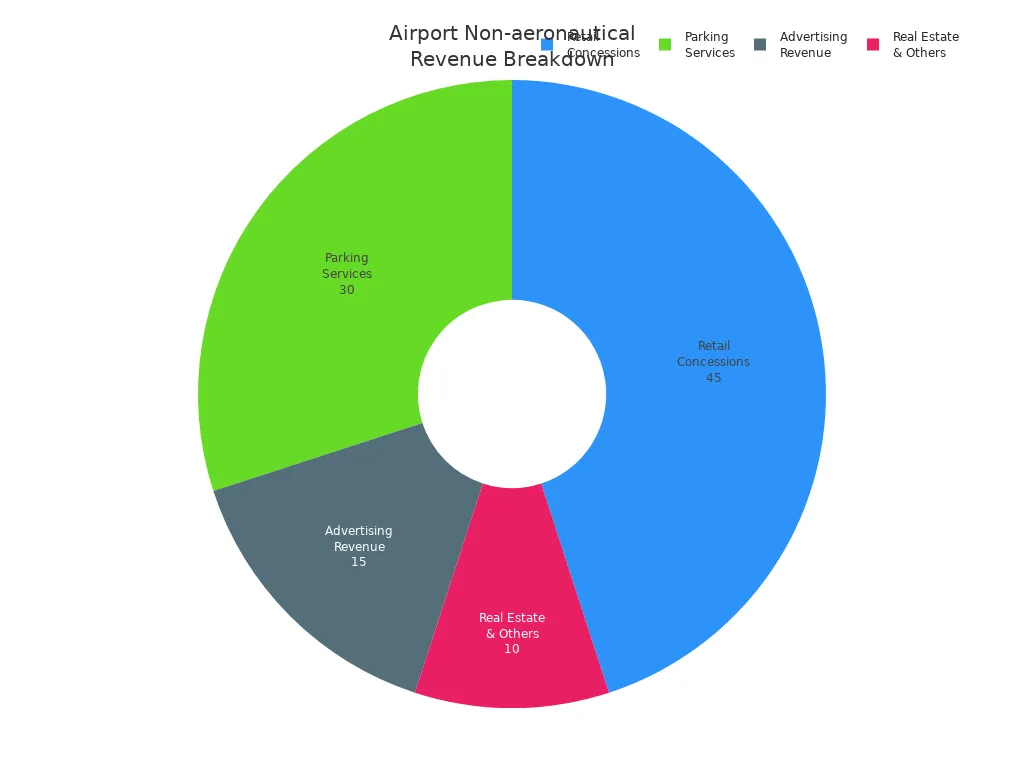
You see airports shifting focus to non-aeronautical revenue streams, with retail concessions now making up 45% of total income. This shift creates a strong need to evaluate roi for every autonomous solution, from kiosk to self-checkout kiosks. The adoption of ai and automation in retail technology has led to faster roi achievement and improved profit margins. Automated retail and self-checkout transform the airport experience, making retail more efficient and responsive.
Revenue Source | Percentage of Total Revenue |
|---|---|
Retail Concessions | 45% |
Parking Services | 30% |
Advertising Revenue | 15% |
Real Estate & Others | 10% |
Key Takeaways
Automated retail can significantly boost airport revenue, with retail concessions making up 45% of total income.
Evaluate ROI by comparing profits from automated solutions against their costs, including technology and operations.
Use real-time data and AI analytics to track sales, customer feedback, and operational efficiency for better decision-making.
Focus on both cost savings and revenue growth to understand the full impact of automation on airport retail success.
Avoid common pitfalls by including all costs in your ROI assessment and ensuring proper staffing and training for new systems.
ROI in Automated Retail
Defining ROI for Airports & Hubs
You need to evaluate roi for automated retail by looking at how much profit you make compared to what you spend on technology, automation, and operations. ROI shows if your investment in automation, such as self-checkout kiosks or kiosks powered by advanced technology, brings real value to your airport retail space. In airports and transportation hubs, automated retail means using technology like robotics, self-checkout, and smart kiosks to sell products without much human help. This approach can lower cost, increase savings, and make retail more efficient.
When you use an roi model, you measure how much revenue your automated retail solution generates versus the cost of setting up and running the technology. You also look at how automation improves customer experience and speeds up service. Automated retail helps you serve more travelers quickly, which is important in busy airport environments. You can track sales, cost, and efficiency using retail technology tools. These tools help you evaluate roi and see if your investment pays off.
Business models like concession and revenue-sharing agreements play a big role in how you calculate roi. Airports often use these models to split revenue between the airport and retail operators. The airport retail sector reached $43.2 billion in 2023 and could grow to $68.8 billion by 2030. This growth means you need strong payment systems to handle different types of transactions and make sure everyone gets their fair share. Complex revenue-sharing deals require you to track every sale and follow payment rules closely. This affects how you evaluate roi because you must include all costs and revenue splits in your calculations.
Impact of Non-Aeronautical Revenue
Retail and food & beverage make up about 46% of non-aeronautical revenue in airports. This shows how important retail is for airport profitability. You also see airport advertising growing fast, especially with new digital technology and interest from luxury brands. Airports now act as retail and hospitality centers, not just places for travel. This shift helps airports earn more and gives travelers a better experience.
You can boost revenue by using automated retail and forming smart partnerships. When you use automation and technology, you can handle more passengers, lower cost, and improve service. This makes your airport more competitive and helps fund new projects. Automated retail lets you use kiosks and self-checkout to reach more customers and increase sales. By tracking data and using technology, you can evaluate roi and make better decisions for your airport retail strategy.
Tip: Focus on both cost and revenue when you evaluate roi for automated retail. This helps you see the full impact of automation and technology on your airport’s success.
Key Metrics to Evaluate ROI
Revenue, Cost Savings, and Efficiency
You need to track both numbers and trends to measure roi for automated retail in airports. Quantitative metrics help you see how automation and technology improve retail performance. You can use a table to organize these metrics:
Metric | Description |
|---|---|
Automation reduces operational costs by minimizing manual labor. | |
Revenue Growth | Automated retail increases revenue by offering new digital products and enhancing customer experiences. |
Productivity Improvement | Technology boosts operational efficiency and reduces downtime. |
Robotics, ai, and analytics play a big role in improving these metrics. You can use predictive maintenance to save money. For example, a large hub airport can save between $3M and $8M each year by reducing emergency repairs. These savings come from better scheduling and do not require cutting jobs. You must also consider the initial costs for ai deployment, which range from $5M to $15M. Ai systems automate processes like baggage handling and kiosks, leading to fewer delays and better throughput. Ai gives you insights for resource planning and capacity management. Automation and self-checkout kiosks help you serve more travelers and boost retail sales. Retail technology tools let you track sales, costs, and efficiency in real time.
Customer Experience and Real-Time Feedback
You must look at qualitative metrics to understand how automated retail affects customer experience. These metrics include:
Dwell time
Average queue time at each kiosk or self-checkout
Baggage handling accuracy
First contact resolution
Real-time feedback is important for roi evaluation. Airports use technology to collect feedback and respond quickly to issues. You can see ongoing insights into passenger sentiment across different retail areas. Improved passenger experience leads to higher retail and food and beverage revenue. The table below shows how airports use real-time feedback:
Evidence Type | Description |
|---|---|
Real-Time Feedback | Airports detect issues immediately and respond effectively. |
Continuous Visibility | Feedback provides ongoing insights into passenger sentiment. |
Better passenger experience increases retail revenue. |
You can use retail technology and ai to analyze feedback and improve performance. Automation helps you deliver faster service and better customer experience. Tracking these metrics lets you evaluate roi and make smart decisions for automated retail.
Data Collection and AI Analytics
Tools and Data Sources for Retail
You need strong data collection tools to measure ROI for automated retail in airports. You can use sensors, cameras, and smart kiosks to gather information about sales, inventory, and customer movement. These technology tools help you track every transaction at each kiosk and self-checkout station. AI systems process this data to spot trends and predict what travelers will buy next. You can use real-time performance dashboards to see how each automated retail unit works. These dashboards show sales, fleet uptime for autonomous cleaning fleets, and unplanned downtime for baggage transport robots. This helps you reduce downtime and improve performance.
You should use automation to collect data without manual work. Automated retail systems send updates about inventory and sales to your main system. This reduces errors and saves time. AI-powered analytics help you find patterns in customer behavior. You can use this information to improve product placement and staffing. Technology also helps you track how well each retail area performs. You can see which products sell best and which kiosks need more attention.
Mapping Passenger Flow and Retail Media
You must understand how passengers move through the airport to optimize automated retail. Mapping passenger flow shows where travelers spend the most time. This helps you place kiosks and retail units in high-traffic zones. You can use AI and technology to analyze passenger movement and dwell time. This data helps you improve retail layout and increase sales.
Passenger flow data shows where travelers stop and shop.
You can use this information to adjust retail strategies and boost revenue.
Real-time analytics reveal which retail zones convert the most traffic into sales.
For example, in a duty-free shop, you can track how many people pass by, stop, and make a purchase. This helps you measure conversion rates and the success of marketing campaigns. You can use this data for optimization and to improve customer experience. Automated retail systems let you respond quickly to changes in passenger flow. You can adjust product displays and staffing during busy times. This approach helps you get the most from your technology investment and supports better ROI.
Tip: Use real-time and predictive analytics to spot trends early. This helps you make smart decisions and improve retail performance.
ROI Calculation Process
Step-by-Step Evaluation
You need a clear process to evaluate roi for automated retail in airports. This helps you see the measurable business impact of your investment. Follow these steps to build a strong roi model for your airport retail project:
Baseline: Start by documenting your current process. Track metrics like error rates, employee hours, and downtime for each kiosk or self-checkout unit. This gives you a starting point for comparison.
Investment: Add up the total cost of your automated retail initiative. Include technology, software, integration, training, and internal resource time. Make sure you count every cost, from the first kiosk to ongoing automation support.
Projected Benefits: Estimate the improvements you expect. Look for time savings, error rate reduction, and revenue growth. Think about how automation and ai can boost sales and improve customer experience.
Time Horizon: Plan how benefits will grow over time. Project your results for Year 1, Year 2, and Year 3. This helps you see when you will recover your investment and start seeing real savings.
Note: Always compare your new automated retail performance to your baseline. This shows the true value of your investment.
You can use several formulas to evaluate roi for airport retail. The table below shows the most common ones:
Formula | Description |
|---|---|
Net Present Value (NPV) | This metric accounts for the time value of money. It gives you a more accurate picture of your project’s financial impact. A positive NPV means your investment is strong. |
Internal Rate of Return (IRR) | This formula shows your return as a percentage. If your IRR is higher than your company’s target, your project is a good choice. |
Simple Payback | Divide your total capital expense by your expected annual cash flow. This quick test tells you how long it will take to recover your investment. |
Example Calculation for Automated Retail
Let’s look at a sample calculation for an automated retail deployment in an airport. This example uses real numbers to show how you can evaluate roi and see the benefits of automation and technology.
Metric | Value |
|---|---|
10,000 | |
Average basket | $45 |
Sales lift | 15% |
Margin | 35% |
Revenue increase | $67,500/month |
Profit increase | $23,625/month |
Annual profit increase | $283,500 |
Total Year 1 Costs | $74,500 |
Year 1 Benefits | $327,600 |
Year 1 ROI | 340% |
Payback Period | 1.85 months |
You can see that automated retail can deliver a high roi in a short time. The payback period is less than two months. This means your airport can recover its investment quickly and start seeing real savings and revenue growth.
Flexible leasing and revenue-sharing models can change how you calculate roi. Many airports now use these models instead of fixed rents. Here’s how they affect your roi model:
Airports link retailer payments to actual revenue performance.
These models encourage better partnership alignment between airports and retail operators.
Airports can replace underperforming tenants faster, which helps with optimization and keeps retail performance high.
When you use a revenue-sharing model, you must include the revenue split in your roi calculation. This means you only count the share of revenue your airport keeps after paying the retail operator. Always adjust your cost and revenue numbers to match your agreement.
Tip: Review your revenue-sharing agreement before you evaluate roi. This ensures your calculation matches your real business situation.
Automated retail, powered by technology and automation, helps you improve customer experience, reduce cost, and increase savings. Use these steps and formulas to evaluate roi and make smart decisions for your airport retail strategy.
Unique Factors in Airports & Hubs
Passenger Flow Variability
You face unique challenges when you evaluate roi for automated retail in an airport. Passenger flow changes throughout the day and year. This affects how you plan, operate, and measure your retail performance. You must track how many travelers pass by, stop, and shop in your retail areas. Use these key metrics to understand the impact:
Metric | Description |
|---|---|
Capture-rate trend | Tracks the percentage of passengers who engage with retail spaces over time. |
Dwell-weighted reach | Measures how long passengers spend in retail areas, influencing sales potential. |
Per-passing-passenger spend | Focuses on revenue generated per passenger who actually passes through the retail area. |
You can use ai and automation to collect and analyze this data. When you see a drop in passenger numbers, you can adjust your retail strategy. Many airports use dynamic lease pricing based on foot traffic. This helps you align cost with actual customer engagement. You can also target specific customer personas and review your product mix to increase revenue and savings. Invest in digital tools and CRM systems to personalize offers and adapt to demand changes. Develop an omnichannel retail strategy to connect digital and physical shopping. These steps help you build a flexible roi model and reduce downtime.
Security, Compliance, and Space
You must follow strict security and compliance rules when you deploy automated retail in an airport. These rules protect both travelers and technology systems. Review the main requirements:
Regulation | Requirements |
|---|---|
EASA Part-IS | Protect safety-critical systems, asset inventory, risk management, continuous monitoring, incident reporting |
TSA Security Directives | IT/OT segmentation, securing baggage systems, cybersecurity implementation plan, timely incident reporting |
Space is another key factor. Airports have limited space for retail. You need to use every square foot wisely. Strategic land use and transport access can boost your roi. Many airports convert vacant areas or old buildings into new retail spaces. Some even turn movie theaters or aging offices into autonomous retail centers. This helps you meet demand and control cost. Competition for space raises rental rates, which impacts your roi and savings. You must focus on optimization to get the best results from your automation and technology investments.
Tip: Always consider passenger flow, security, and space when you plan automated retail in an airport. These factors shape your roi and long-term success.
Avoiding Common ROI Pitfalls
Mistakes in Automated Retail Assessment
You can make several mistakes when you assess ROI for automated retail in airports. These mistakes can lead to poor decisions and missed opportunities. Many airport operators forget to include all costs, such as maintenance and software updates. This mistake can cause automated retail projects to fall short of financial goals. Some teams also overlook the need for proper staffing and training. Even if your technology works, you may see unhappy customers if your staff cannot support the new systems.
Here is a table that shows common mistakes and their effects:
Mistake Description | Implication |
|---|---|
Ignoring total cost of ownership, including maintenance and updates | Leads to underperformance against financial projections |
Failing to address staffing and training gaps | Results in poor customer experience despite functional technology |
You may also run into problems if you use inaccurate data or make wrong assumptions. These errors can change how you see costs and revenues. You might not find the real reasons for problems in your retail operations. If you do not understand how stakeholders behave, you could make choices that do not match the true performance of your automated retail setup.
Inaccurate data can distort the understanding of costs and revenues, leading to misguided decisions.
Flawed assumptions may prevent the identification of root causes of issues, further complicating evaluations.
Misjudging stakeholder behavior can result in decisions that do not reflect the true performance of retail operations.
Tips for Reliable ROI Evaluation
You can avoid these pitfalls by using the right tools and processes. Start by using solutions that track every transaction in your retail environment. For example, the EGoal Airport Module helps you manage revenue share, track minimum annual guarantees, and view terminal-level dashboards. This tool fits the complex needs of airport retail. Automated sales data capture connects to tenant POS systems. It records every sale in real time and helps you spot errors quickly. Data-driven operations automate tenant management and remove manual reporting. These steps help you get accurate numbers and make better decisions.
Tool/Process | Description |
|---|---|
EGoal Airport Module | Covers MAG tracking, revenue share calculations, terminal-level dashboards, and concession fee billing, tailored for airport retail's complexities. |
Automated Sales Data Capture | Connects to tenant POS systems to automatically capture every transaction, ensuring real-time validation and anomaly detection. |
Data-Driven Operations | Automates tenant management and eliminates manual reporting, designed for the intricacies of multi-tenant retail environments. |
Tip: Always check your data sources and review your assumptions before you finalize your ROI calculations. This practice helps you build a strong case for your automated retail investment and supports long-term success in airport retail.
Next Steps for ROI Evaluation
Immediate Actions for Retailers
You can start improving ROI for automated retail in your airport by taking a few clear steps. These actions help you build a strong foundation for future growth and success.
Select data tools that connect with your current systems. This makes it easier to track sales and performance across all retail units.
Check that your data meets privacy rules and stays accurate. This protects your airport and builds trust with travelers.
Set clear goals for your retail project. Decide what you want to achieve, such as higher sales or better customer service.
Run a pilot test before you expand. This lets you see how automation works in your airport and helps you fix problems early.
Create teams from different departments. When you work together, you solve issues faster and make smarter decisions.
Tip: Start small and learn from each step. You can scale your retail automation once you see positive results.
Resources for Ongoing Assessment
You need the right resources to keep improving ROI for automated retail in your airport. AI analytics help you predict what travelers will buy and when. You can use this information to plan promotions, adjust staffing, and manage suppliers. By combining data from point-of-sale systems and flight schedules, you gain a better view of your retail performance.
Collaboration with airport authorities helps you share data and improve demand forecasting. This partnership ensures products are available in the best locations, which increases sales and revenue. Airports now use AI to track passenger movements and retail transactions in real time. You can create a digital model of your airport to test new layouts and staffing plans. This approach helps you match retail services to actual demand and improve the travel experience.
Note: Use AI analytics and real-time data to make decisions that boost ROI and keep your airport retail competitive.
Resource | Benefit |
|---|---|
AI Analytics | Predicts demand and improves planning |
Data Integration | Combines sales and flight information |
Collaboration | Shares data for better forecasting |
Digital Twin | Tests layouts and staffing in real time |
You can boost your airport’s retail success by using a structured, data-driven approach to ROI. Track key metrics, review unique airport factors, and use AI analytics for better results.
Review your costs and benefits often.
Use real-time data to adjust your strategy.
Tip: Make smart investment choices by following best practices and using the right tools. This helps you stay ahead in airport retail.
FAQ
What is ROI in airport automated retail?
ROI stands for "Return on Investment." You measure how much profit you make compared to what you spend on automated retail technology. ROI helps you decide if your investment is worth it.
How do you track ROI for self-checkout kiosks?
You track ROI by recording sales, cost savings, and customer feedback. Use real-time dashboards to see performance.
Tip: Check your numbers often to spot trends and improve results.
Which metrics matter most for ROI evaluation?
You focus on these metrics:
Sales growth
Cost savings
Customer satisfaction
Each metric shows how well your automated retail performs.
Can AI improve ROI in airport retail?
Yes! AI helps you predict demand, manage inventory, and analyze passenger flow.
Benefit | How AI Helps |
|---|---|
Faster sales | Predicts trends |
Less waste | Optimizes inventory |
See Also
Comparing Micromarkets And Smart Stores In Global Retail
Modern Retail Benefits From AI-Driven Combo Vending Machines
Starting An AI-Driven Corner Store With Low Costs
Understanding The Growth Of AI-Enhanced Corner Stores
Boosting Office Productivity With Intelligent Vending Solutions
