A Step-by-Step Guide to Digital Transformation Roadmaps for Convenience Stores


A digital transformation roadmap helps you plan how to use technology. It can make your convenience store work better and help customers more. Many store owners now buy digital tools. The number went up from 27% in 2020 to 57% in 2021. You get benefits like quicker transactions and mobile payment choices. You also get better inventory management. Stores that use new technology often spend less money. They also make customers happier. Surveys and mystery shopping show digital upgrades help every part of the store visit. This is not just at the checkout.
Key Takeaways
Look at your digital tools to see what you use now. Find out what works and what needs to get better. This helps you see where your technology is missing things.
Make goals that focus on your customers. Write these goals down. Share them with your team so everyone knows the plan.
Pick technology that matches what your store needs. Think about using cloud-based POS systems and loyalty apps. These tools can make shopping better for your customers.
Teach your staff in different ways, like classroom lessons and learning on the job. This helps them feel sure about using new tools. It also makes it easier to start using them.
Check how your store is doing by looking at KPIs often. Change your plans if the data shows you need to. This helps your digital transformation get better all the time.
Start Your Digital Transformation Roadmap

Assess Current Digital State
You must know how your store uses technology before you start. First, look at the digital tools you use each day. Many convenience stores use inventory management software. They also use opening or midday checklists. Makeline and temperature checks are common too. These tools help you track products. They keep your store safe. They make sure things run well.
Inventory management software shows what is in stock.
Opening and midday checklists help your team stay organized.
Makeline and temperature checks keep food safe.
More than 70% of small shops use cloud-based POS systems. These systems help you manage sales and inventory. Check if your store uses these tools. See how well they work for you.
You can use a table to compare your store’s digital skills with others:
Attribute Category | Description | Impact on Digital Performance Metrics |
|---|---|---|
Table-Stakes Capabilities | Basic digital tools needed to run your store. | Helps customers return again. |
Differentiating Capabilities | Advanced features that make your store special. | Raises sales, conversions, and customer happiness. |
Tip: Make a list of all digital tools and processes you use. This helps you see what you have and what you need to improve.
Turning paper documents into digital files is smart. You can scan papers. Use OCR to read the text. Tag files with keywords. Store files in a safe system. This saves time and money. It makes finding information easier. You protect important data. You use less paper, which helps the environment.
Here are steps to digitize your documents:
Scan papers with a scanner.
Use OCR to read the text.
Tag files with keywords.
Check for mistakes.
Store files safely.
Make sure files are easy to find.
Connect digital files to your daily work.
Digitizing helps you work faster. You spend less money. You serve customers better. Your team works together more easily. Your data stays safe.
Identify Gaps and Opportunities
After checking your current state, find what is missing. Many stores have gaps because their systems do not connect well. This makes it hard to collect customer data. It is tough to know what shoppers want. If you use third-party platforms, you may lose touch with customers. You might miss chances to build loyalty.
There are many ways to improve. Technology helps you gather data. This data guides your decisions. It helps your store grow. Advanced tools like AI and machine learning show what customers like. They show how people shop. Digital signage can boost sales by up to 30%. It promotes add-ons and bundles. Your staff can focus on other tasks.
Digital checklists give real-time feedback. They help your team follow rules. They make sure tasks get done. These checklists create records of what happens in your store. You can fix problems quickly.
A centralized platform lets you update prices and promotions fast. This keeps your marketing fresh. It helps you react to changes in the market.
Note: When you find gaps, think about how new digital tools can help. Look for ways to make your store run better. Try to give your customers a better experience.
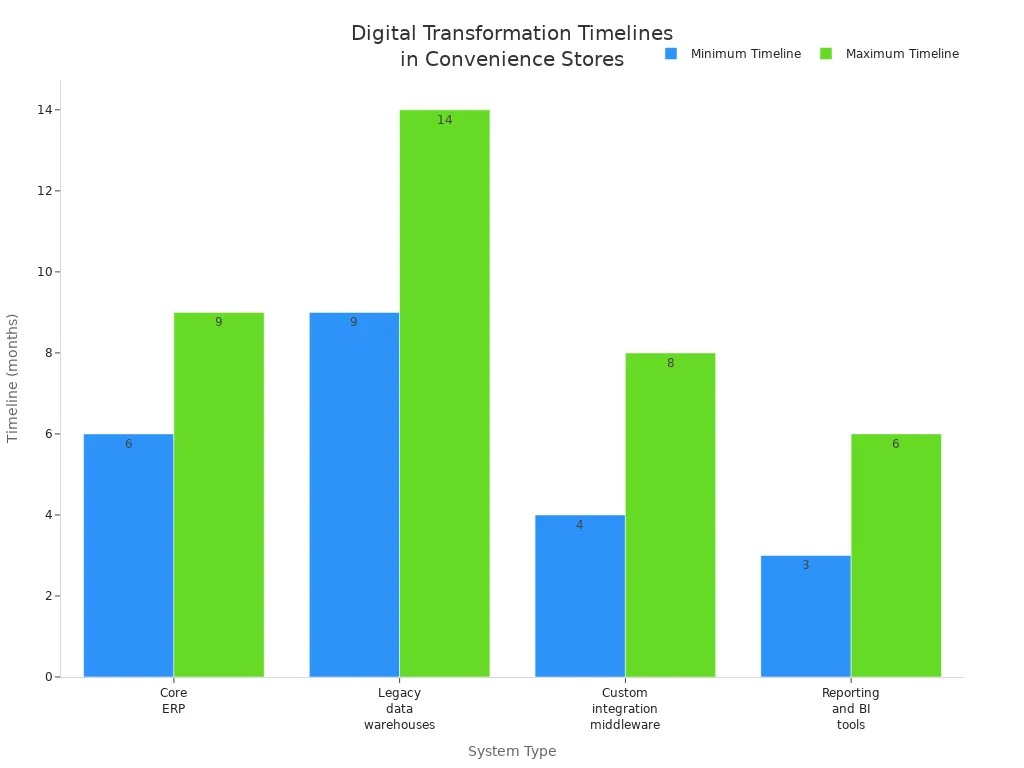
Remember, every store is different. Your digital transformation roadmap will help you find the right path. By knowing your current state and finding gaps, you can pick the best tools and steps for your store.
Set Goals and Define Scope
Establish Clear Objectives
You should set clear goals before you start. These goals help you stay focused. They also help you see your progress. Many stores pick goals that put customers first. Here are some examples of clear goals you can set:
Stay customer-centric. Always focus on what helps your customers.
Treat digital transformation as a business project. It is not just an IT upgrade. Involve your business leaders. Check your progress often.
Change how you measure return on investment. Look at opportunity costs. See how fast you can adapt.
Simplify your technology. Match your spending to business needs. Find ways to make things better.
Build a strong data strategy. Know how data helps your business. Use it to guide your actions.
You can also set goals like mobile ordering or personalized experiences. You can try to increase app downloads. Use analytics to track how many customers use offers in your app.
Tip: Write down your goals. Share them with your team. This helps everyone work together.
Outline Requirements and Priorities
After you set your goals, define what your store needs. Many stores use automation and AI to work faster. They also serve customers better. Automated checkout and robotic stock systems lower labor costs. They improve service. AI tools give you real-time data. You can make quick decisions. You can offer personalized deals.
Younger shoppers want easy, tech-friendly shopping. You should invest in smart technology. This meets their needs. It also reduces your need for outside labor. Many countries invest in digital infrastructure for stores. This is part of their economic plans.
When you plan your digital transformation roadmap, focus on these priorities:
Make your store efficient and customer-focused.
Build a culture that welcomes change and new ideas.
Improve how your team makes decisions and works together.
Combine digital tools with human service for a better customer experience.
Try new business ideas, like catering or online ordering.
A clear scope and strong priorities help you pick the right steps for your store’s future.
Choose Key Technologies

Payment and POS Solutions
You need a good payment and POS system for your store. These tools help you track sales and manage inventory. They also help you serve customers faster. Many stores use cloud-based POS systems. You can look at the table below to compare some choices:
POS System | Best For | Key Features | Pros | Cons |
|---|---|---|---|---|
Square for Retail | Small to mid-sized stores | Cloud-based, inventory management, customizable checkout | No monthly subscription, strong analytics | Limited advanced inventory, high fees |
Shopify POS | Stores with an online presence | Omnichannel sales, smart inventory tracking | Seamless eCommerce, scalable | Needs Shopify subscription |
Lightspeed Retail | Medium to large stores | Advanced inventory, built-in loyalty | Robust reporting, great inventory tracking | Higher cost, learning curve |
Pick a system that fits your store’s size and needs. A good POS system makes daily work easier. It also gives you better data for your store.
Apps, Loyalty, and Online Ordering
You can use apps to help your store do better. Loyalty programs and online ordering bring customers back. The Speedway c-store app is a good example. It lets people search for items and use coupons. They can pay and track rewards too. These features make shopping simple and fun.
Most stores now use loyalty programs. These programs help keep customers happy. Try these steps to make your loyalty program better:
Use customer data to make special offers.
Connect loyalty data with other systems for more insights.
Give rewards to get customers to visit more.
You can also add online ordering to your store. This lets people shop from home and pick up in the store.
Tip: Apps and loyalty programs help your store stand out.
Data Analytics and AI Tools
You can use data analytics and AI tools to help your store. These tools show what works and what needs to change. For example, cloud-managed video surveillance helps train staff. AI video analytics can watch wait times and store layout. This helps you know when to add more staff and improve service.
You can see how customers move in your store. This shows which products are popular. Predictive analytics helps you pick fresh items and set prices. Real-time inventory tools help you keep popular items in stock.
Video analytics show your busiest hours.
You can find problems in your store layout and fix them.
These tools help you make better choices every day.
Picking the right technology is important for your digital transformation roadmap. You will get better results and happier customers when you use these tools.
Plan and Implement in Phases
Prioritize and Sequence Rollouts
You should plan each step for your digital transformation roadmap. First, write down all the digital tools you want to use. Put them in order by how much they help your store. Also, think about how easy each one is to set up. Pick the projects that help customers or save your team time.
Here is a simple way to plan your upgrades:
Phase | Example Technology | Goal |
|---|---|---|
Phase 1 | Cloud POS System | Faster checkout |
Phase 2 | Loyalty App | More repeat customers |
Phase 3 | Better product promotion | |
Phase 4 | Data Analytics Software | Smarter inventory choices |
This table helps you choose which upgrades to do first. Start with the tools that fix your biggest problems. Add more features as your team learns to use them.
Tip: Try new technology in one part of your store first. This lets you find problems before using it everywhere.
Operationalize Digital Integrations
Digital integrations can make your store more fun for customers. Interactive kiosks keep people busy while they wait. Digital signage helps shoppers find things and learn about products. You can rent out ad space on these screens to local businesses for extra money.
Digital signage works like a virtual salesperson. It shows products that customers might like. You can display catalogs that change when you get new stock. Show customer reviews and social media posts to build trust. Cooking videos and food pairing ideas make shopping more interesting.
Change your signs for holidays and seasons to make the store feel friendly. Use data analytics software to see how customers act in your store. This helps you make better choices and run your store more smoothly.
Your digital transformation roadmap helps you follow these steps. You will build a store that keeps up with new trends and gives customers what they want.
Team Training & Change Management
Staff Training Approaches
You must get your team ready for new digital tools. Training helps your staff feel sure about using technology. Blended learning is a good way for convenience stores to teach. You can use both classroom lessons and digital eLearning. One-on-one role play lets your team try real-life situations. Group learning helps your team work together and understand more. On-the-job training lets your staff learn while doing their jobs.
Classroom lessons teach your team the basics.
Digital eLearning lets your staff learn when they want.
Role play helps your team practice real skills.
Group learning helps your team share ideas.
On-the-job training links lessons to real work.
You can follow steps to train new workers. On the first day, a new worker does an online training, like Alcohol Sales. Then, they look at store rules. On the second day, the new worker practices with another team member. They use role play to learn. This way, your staff remembers what they learn and uses it in the store.
Tip: Use many ways to train your team. This helps everyone stay interested and learn new skills.
Building a Digital Culture
You build a digital culture by helping your team connect and use technology easily. Online stores let your staff buy branded items. This makes your team happy and proud. Digital workplace tools help your staff share news and work together. These tools help your team feel like they are part of a group.
Online stores let your staff buy branded things anytime.
Digital tools help your team talk across different stores.
Easy info helps your staff learn faster.
Working together helps your team learn skills quickly.
When your team feels part of the group, they do better work. They also find new ways to fix problems. You make a good place to work by giving your staff the right tools. Simple shopping and digital platforms make daily jobs easier. Your team feels important and wants to do well.
Note: A strong digital culture keeps your store ready for new changes and helps you stay ahead.
Track Progress and Optimize
Monitor KPIs and Results
You need to check how your store is doing as you follow your digital transformation roadmap. Key performance indicators, or KPIs, show how well your store uses new technology. These numbers help you know if your changes are working. You can use KPIs to measure things like loyalty, spending, and how often customers visit. Here is a table with some common KPIs for convenience stores:
KPI | What it Measures | Why it Matters |
|---|---|---|
Loyalty penetration rate | Percentage of total transactions made by loyalty members | Shows how many customers use your loyalty program. |
Visit frequency per member | Frequency of loyalty members returning | Tells you if customers come back more often. |
Average spend per loyalty member | Average transaction value for loyalty members | Helps you see if loyalty members spend more. |
Offer redemption rate | Percentage of offers redeemed versus distributed | Shows if your offers are relevant and useful. |
Customer retention rate | Active loyalty members over a timeframe | Measures how well you keep your customers. |
You can look at these KPIs every week or month. This helps you find trends and problems early. If you see low numbers, you can change your offers or make your loyalty program better.
Tip: Use charts and graphs to help your team understand KPIs easily.
Adjust the Roadmap
You need to be ready to change your plan when you use new digital tools. If your KPIs show things are slow, you can try new ideas. You can also update your goals. Test changes in one part of your store before using them everywhere. Ask your team what they think. They know what works and what needs to get better.
You can have regular meetings to talk about your results. Make small changes often. This helps your store keep getting better. When you learn from your data and improve your digital transformation roadmap, your business gets stronger.
Note: Checking and changing your plan helps you reach your goals faster and keeps your store ready for new things.
Overcome Common Challenges
Budget and Cost Control
You might worry about spending too much money. Many stores have this problem. There are smart ways to control your budget.
Teach your team to use supplies carefully. This helps you waste less and save money.
Check your sales numbers often. Make only the food you need so you do not throw away extra.
Look for extra costs in things like software or WiFi. These small fees can add up quickly.
Train your workers to do different jobs. This means you need fewer people to do more work.
Talk to your suppliers to get better prices.
Use technology to keep track of inventory and do tasks automatically. This can help you spend less on workers.
Tip: Make small changes first. Watch how much money you save and use it for bigger upgrades.
Staff Buy-In and Communication
It is important to get your team to agree with changes. Switching from paper to digital tools can be hard. You need to help your staff feel good about new systems.
Tell your team why you are making changes. Show them how digital tools make work easier.
Give your team time to learn new things. Offer training and help.
Listen to what your team says. They can find problems early.
Celebrate when your team does something well. This helps everyone stay excited.
When you start new programs, like loyalty or curbside pickup, ask your team to help from the beginning. Good talking helps everyone feel included.
Data Security and Privacy
Keeping customer data safe is very important. People want to feel safe when they shop and share their information. You must keep their trust.
Description | |
|---|---|
Hardware and Physical Security | Use strong kiosks and lock them down so no one can steal or break them. |
Software Security Updates | Update your software often to fix problems and stay safe. |
Data Encryption | Lock important data so no one can steal it. |
Secure Network Connections | Use safe networks to keep your systems protected. |
Authentication and Access Control | Use strong passwords and two-step checks to control who can use your systems. |
Ethical Data Privacy Practices | Always ask customers before you collect their data and respect their privacy. |
Note: Good security keeps your store safe and helps customers trust you. Always make data safety very important.
You now have a clear roadmap for digital transformation in your convenience store.
Review each step and set your goals.
Choose the right technology and train your team.
Track your progress and adjust your plan.
Start today. Every small change moves you closer to a smarter, more efficient store. Your journey never ends. Take the first step and build your digital future.
FAQ
What is a digital transformation roadmap?
A digital transformation roadmap shows you the steps to use technology in your store. You follow this plan to improve your business and help your customers.
How do you choose the right technology for your store?
You look at your store’s needs. You compare tools like POS systems, apps, and analytics. You pick the ones that help you work faster and serve customers better.
Do you need to train your staff for digital tools?
Yes. You teach your team how to use new systems. Training helps your staff feel confident and keeps your store running smoothly.
How can you keep customer data safe?
You use strong passwords and update software often. You encrypt data and ask customers before collecting information. These steps protect your store and build trust.
What if your budget is small?
You start with simple changes. You use free or low-cost tools. You track your savings and invest in bigger upgrades when you can.
